
The Faculty of Media and Public Relations at the University of Dubrovnik, in cooperation with the Dubrovnik Librarians’ Association and the Dubrovnik Audiovisual Centre, has completed the project “Establishing the Centre for Fact-Checking and Civic Resilience – DU-CHECK.” From October 2023 to the end of 2025, the Centre carried out numerous activities aimed at strengthening media literacy and society’s resilience to disinformation, achieving exceptional results and raising public awareness of the importance of media literacy.
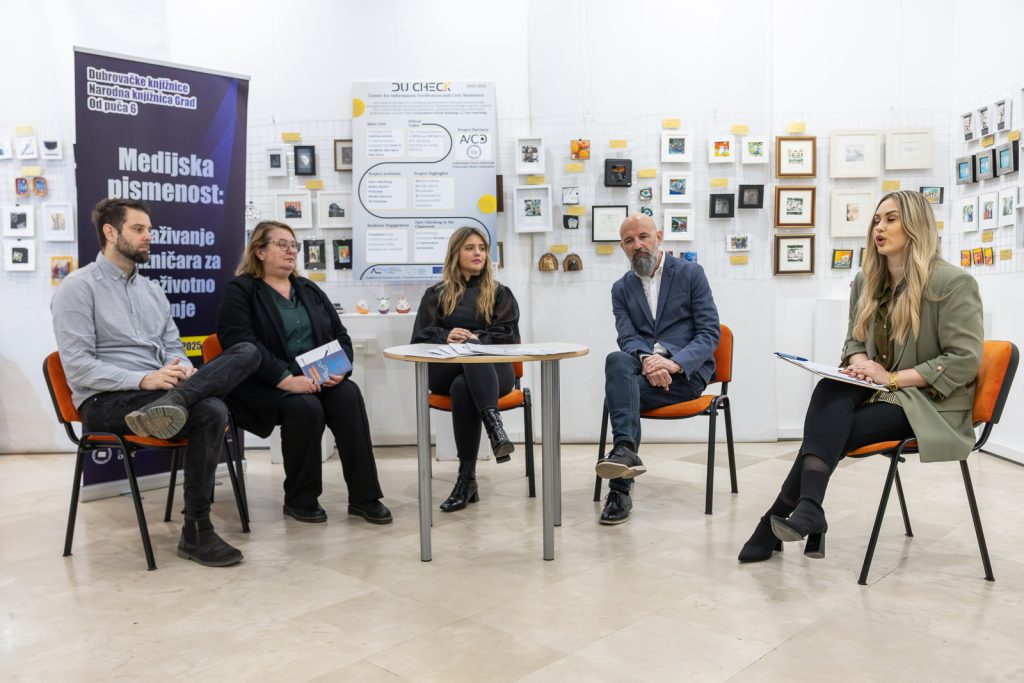
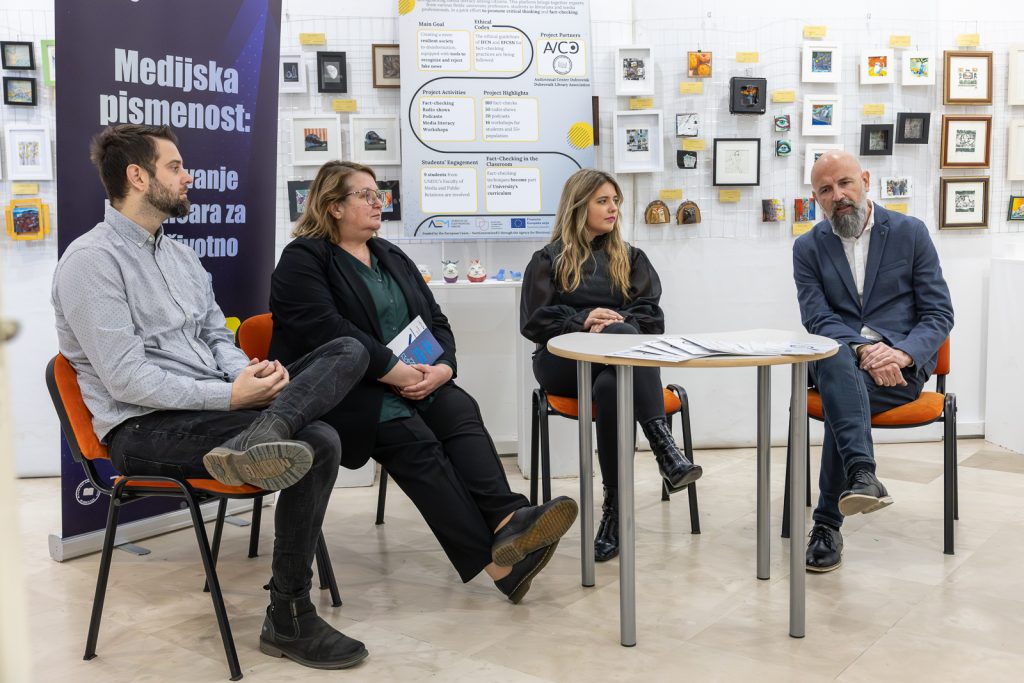
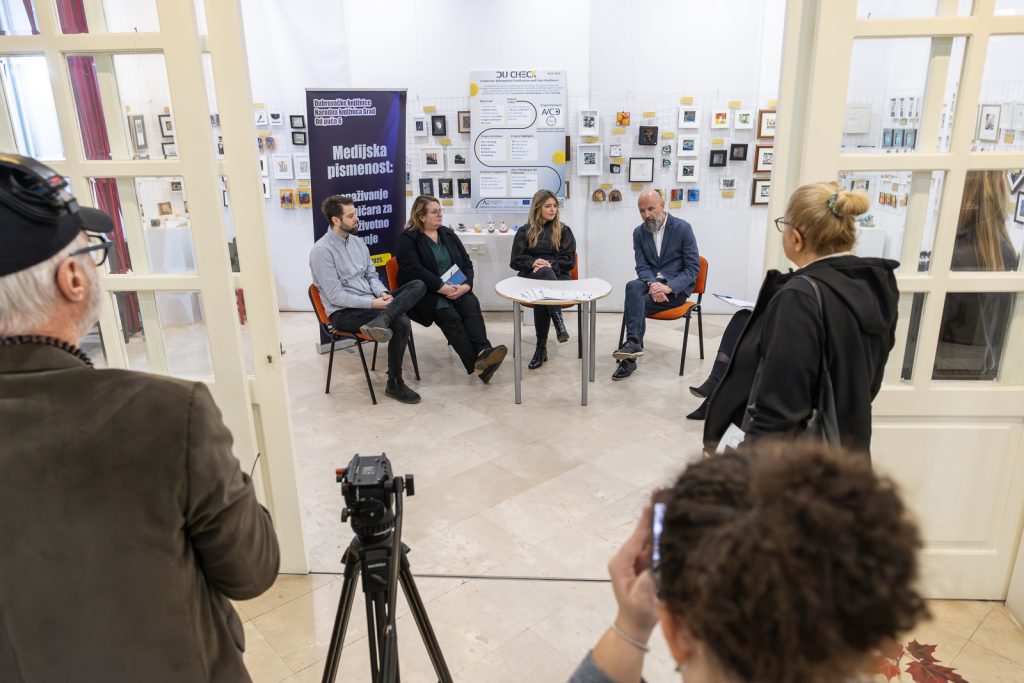
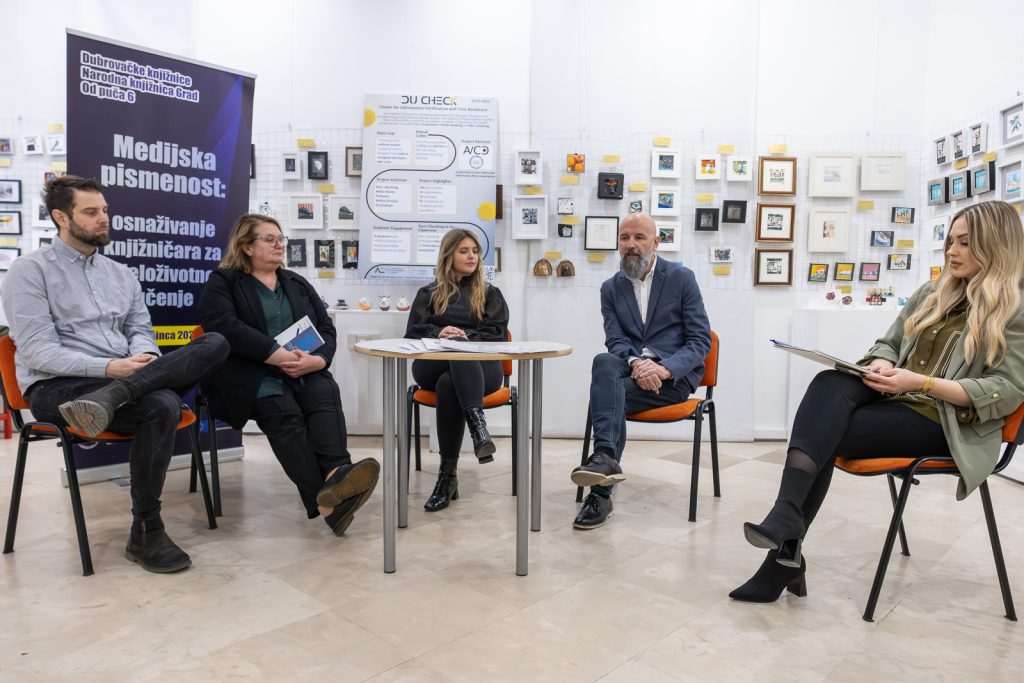
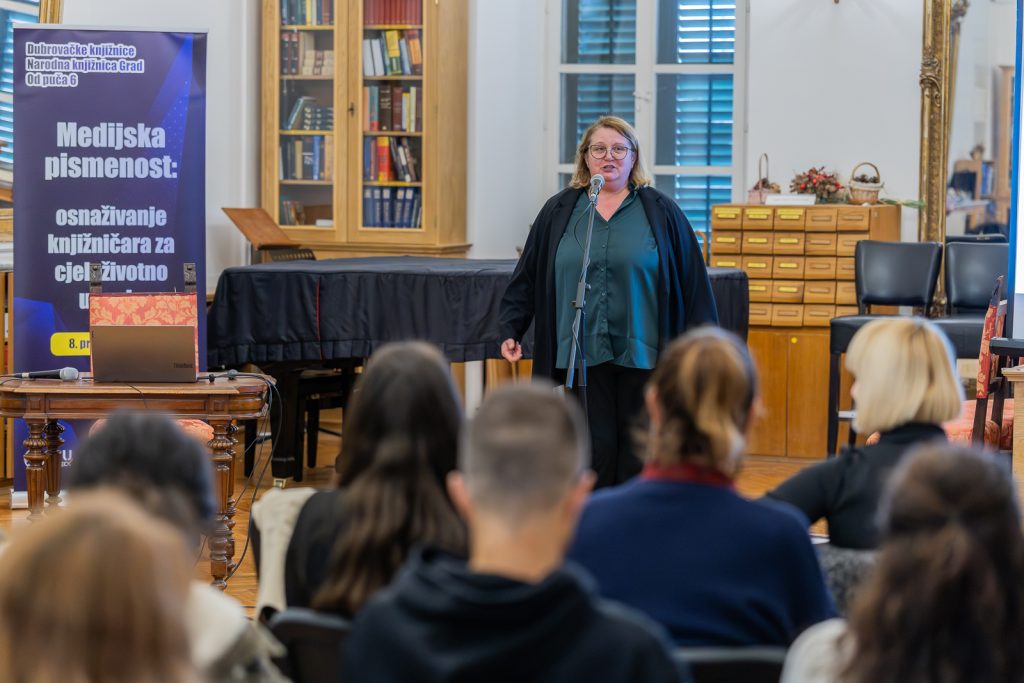
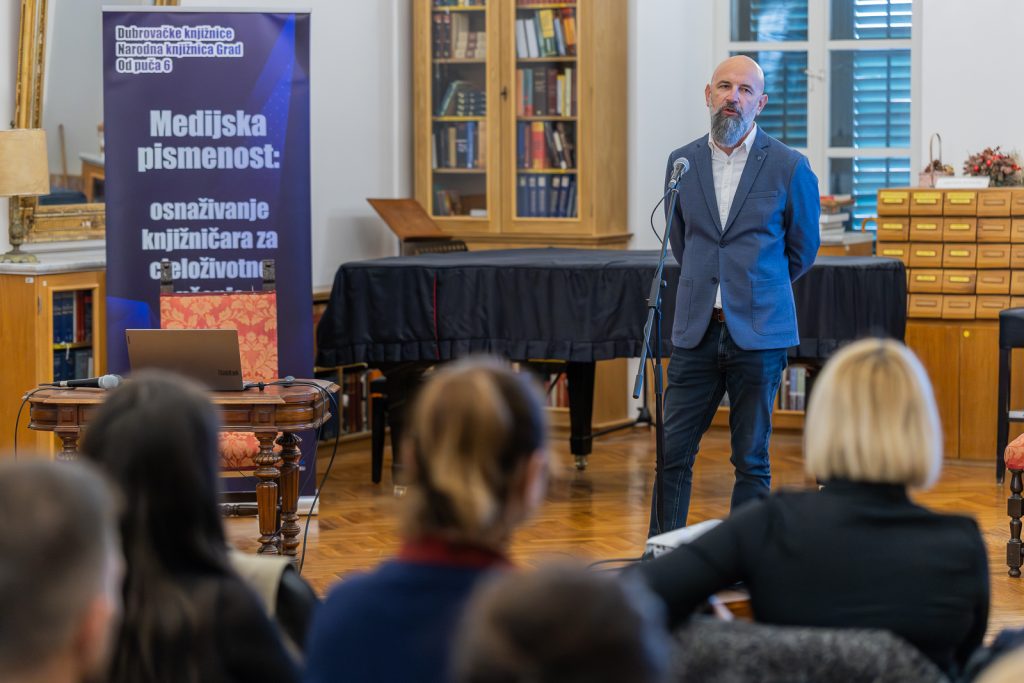
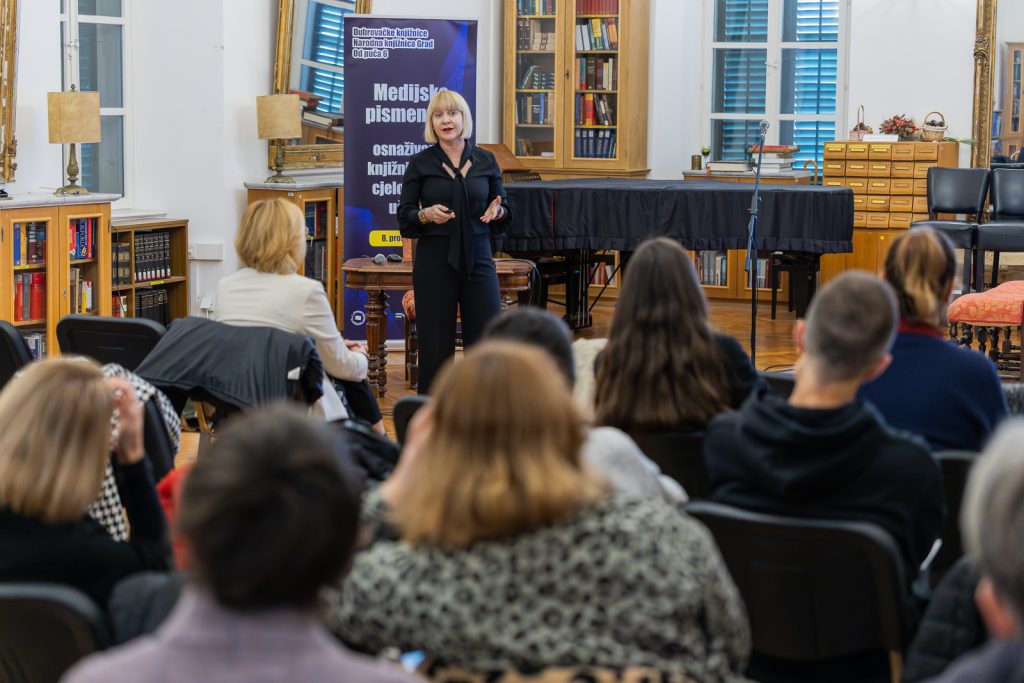
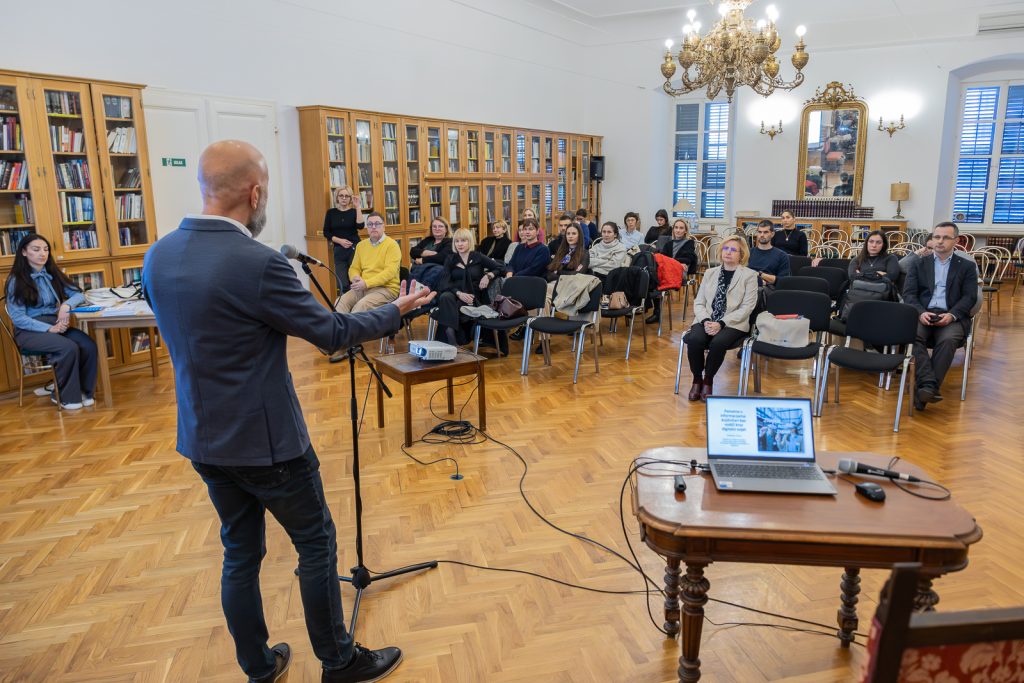
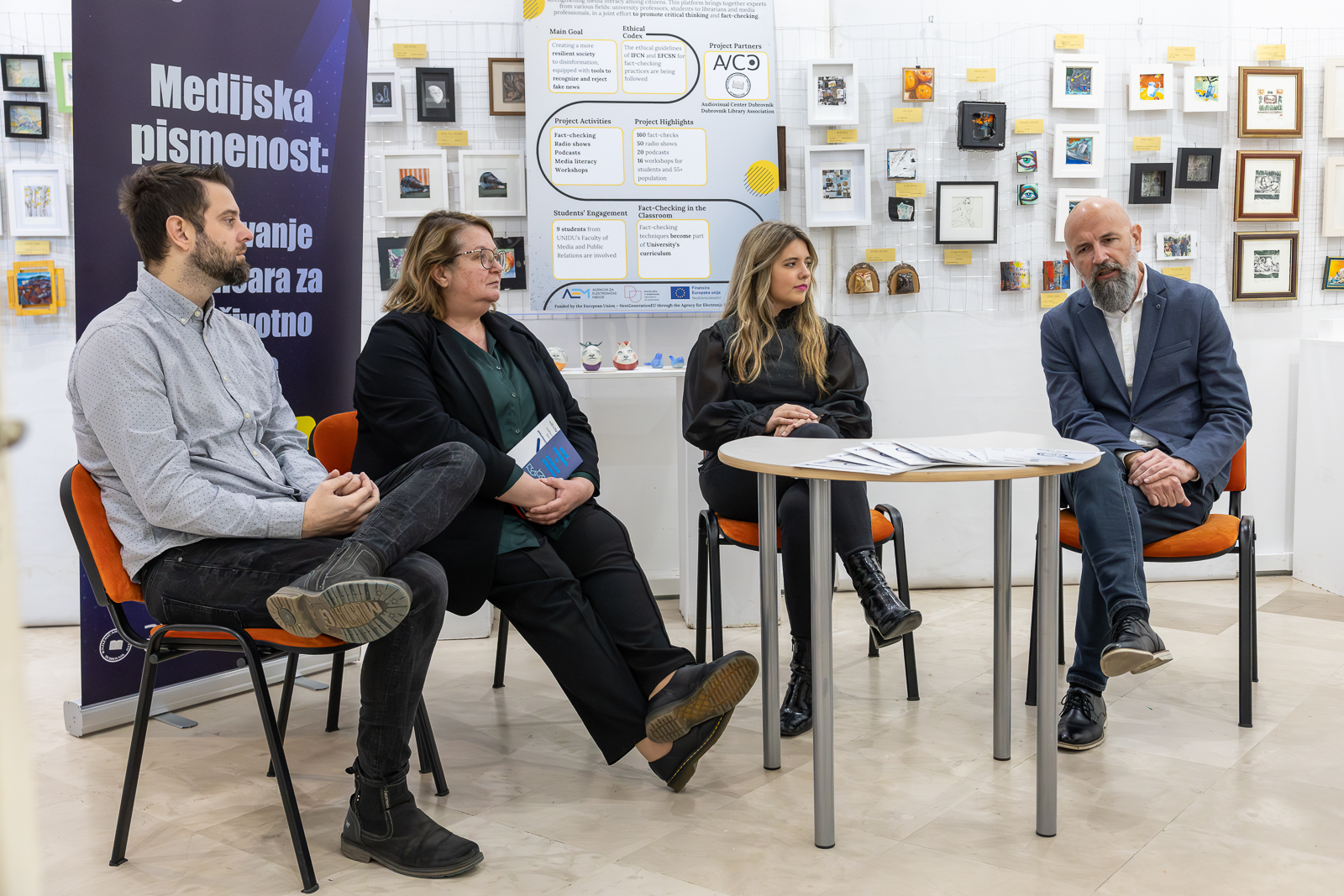
At the final DU-CHECK press conference, held on Monday, 8 December 2025, in the lobby of the Dubrovnik Public Library, the results of two years of work on advancing media and information literacy in the Dubrovnik-Neretva County were presented. On the same day, as part of the project, the Dubrovnik Librarians’ Association organised a professional seminar dedicated to empowering librarians in the field of media literacy and lifelong learning. In an era of digital transformation, media literacy has become a key competence shaping not only the business sector but also cultural and educational institutions such as libraries. The seminar focused on current needs, challenges, and opportunities for developing librarians’ media competencies, as well as examples of good practices that libraries can implement in their work.
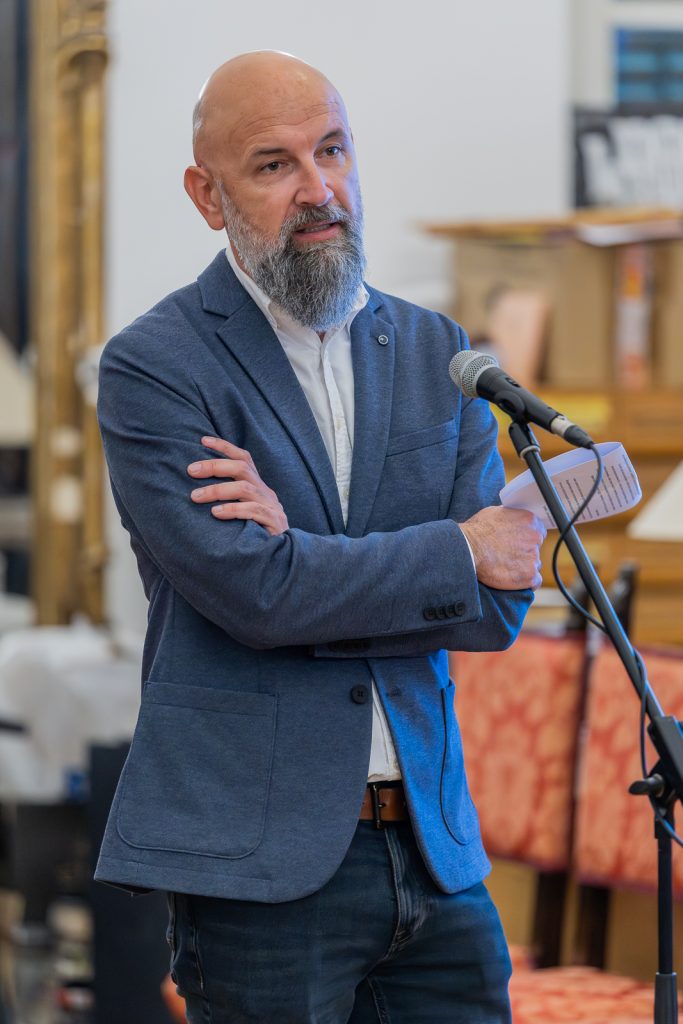
Members of the media and professional public were addressed by the project leader, Vice-Rector for Internationalisation, Public Relations and Student Affairs, Prof. Mato Brautović, PhD; project activity coordinator Tereza Buconić; and project partners — President of the Dubrovnik Librarians’ Association Lucija Bjelokosić and Secretary of the Dubrovnik Audiovisual Centre Žarko Dragojević — who outlined key findings, experiences, and the project’s overall contribution to the community.
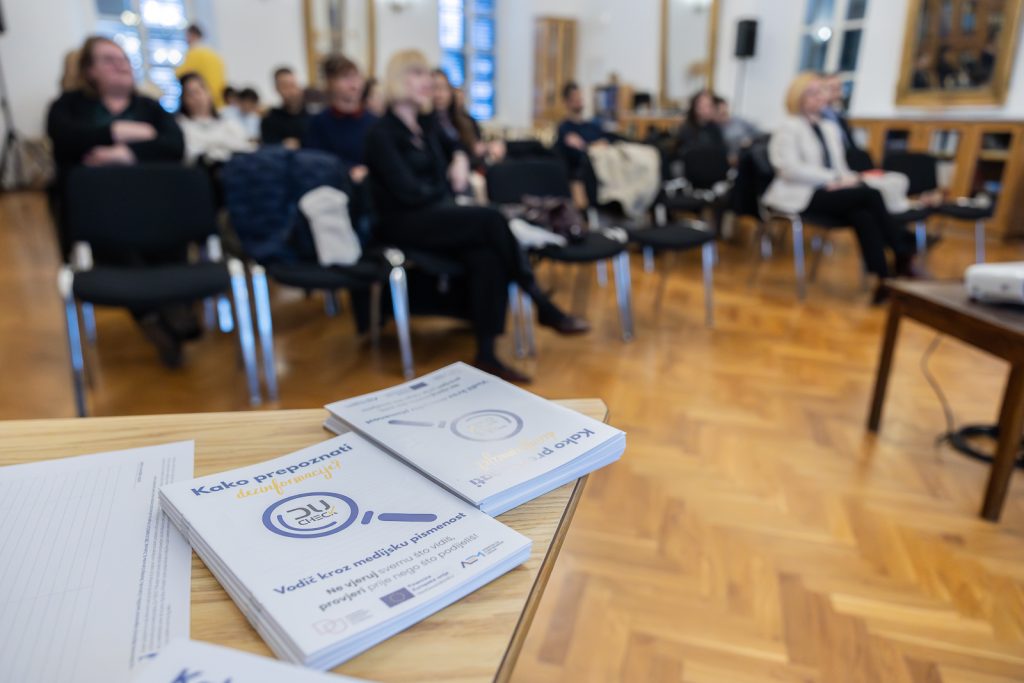
The project delivered significant results: an informational booklet for the general public on recognising disinformation and staying safe in the digital environment was created and distributed in over 20,000 copies; 28 podcast episodes were recorded and published on UNIDU Television, along with more than 50 radio programmes on UNIDU Radio. Sixteen workshops were held for citizens aged 55 and older across the Dubrovnik-Neretva County, with more than 150 participants. Workshops took place in Dubrovnik, Cavtat, Ploče, Metković, Blato, Vela Luka, as well as in Lapad Elementary School, Dubrovnik Gymnasium and Dubrovnik Medical School. At the same time, more than 100 students gained new knowledge and skills through specialised workshops on fact-checking and the use of digital tools in research. Based on their newly acquired skills and under the mentorship of project leaders, they produced 160 fact-checked articles. All project outputs are available on the DU-CHECK Centre’s website.
Experts from the University of Dubrovnik developed a curriculum for training librarians in implementing media literacy programmes within their institutions. These materials are available for further use to all interested members of the Croatian Library Association.
Project leader Prof. Mato Brautović commented on the importance of advancing media literacy:
“In the digital age, education and media literacy are not a luxury, but a necessity for safeguarding truth and democracy. Our aim is to empower all citizens to recognise and resist disinformation. We thank all participants, partners and members of the community for their support and engagement throughout the project. As the fight against disinformation is an ongoing challenge, DU-CHECK will continue to promote critical thinking and open dialogue on the future of media freedom and literacy in the digital era.”
Throughout the project, Centre associates took part in numerous international conferences, workshops and professional training programmes, establishing cooperation with academic, media and regulatory partners. DU-CHECK is also part of the national platform “Točno tako”. Its contribution to strengthening information integrity, developing civic resilience and promoting the importance of fact-checking in everyday life represents a significant step forward in combating disinformation.