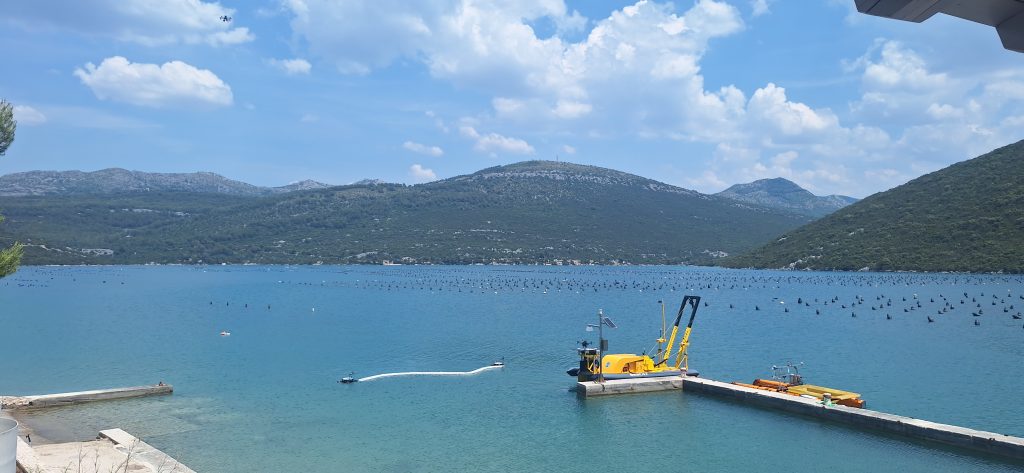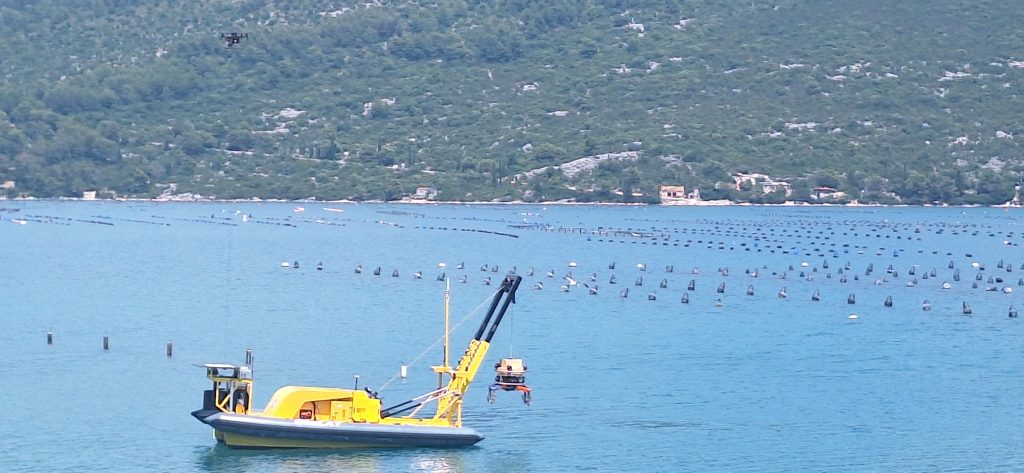

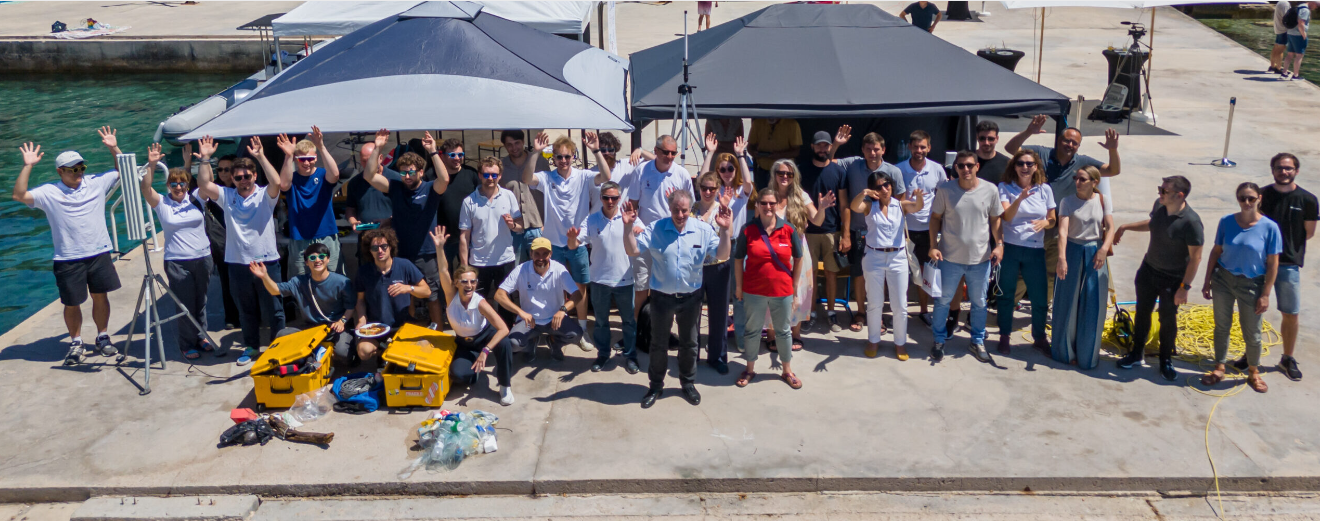
From June 01st to 09th 2026, a series of preparation activities and integrated system trials of the SeaClear 2.0 system were successfully conducted at Bistrina, Croatia. The activities brought together the entire SeaClear 2.0 consortium and all technological components of the SeaClear 2.0 system, enabling extensive testing, validation and optimisation under real operational conditions.
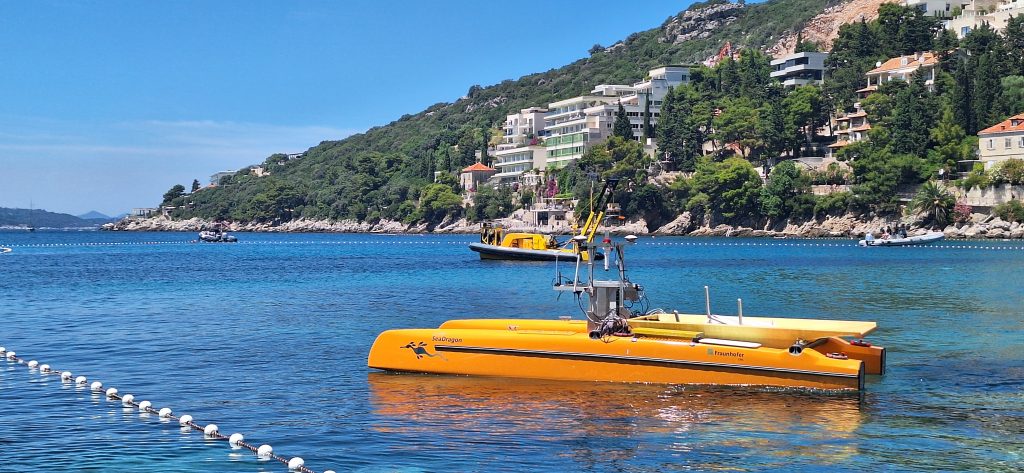
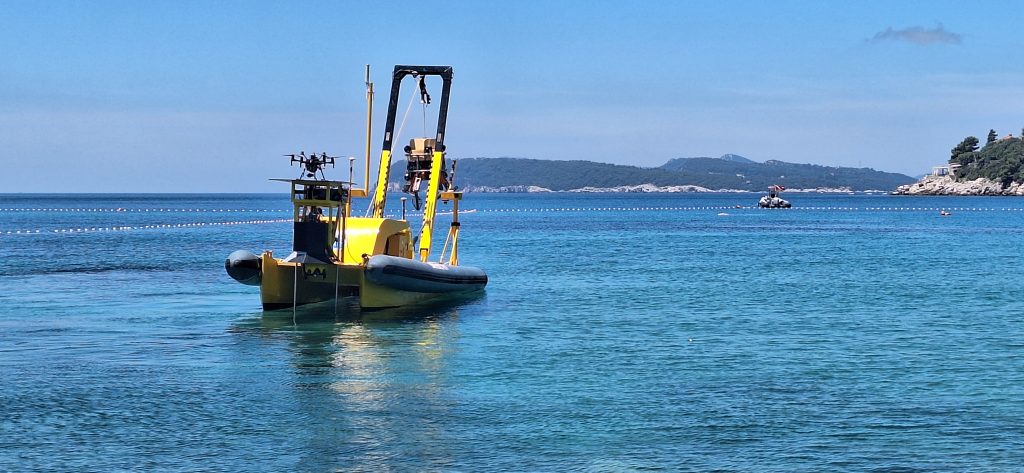
During this week, experts and technical teams of the consortium from TU München, Subsea Tech, Fraunhofer CML, University of Dubrovnik – LARIAT, Universitatea Tehnică Cluj-Napoca, and TU Delft – collaboratively tested, calibrated, and refined the system’s multiple autonomous components. These included unmanned surface vehicles (USVs) – SeaCat, the mothership and SeaDragon, the collected litter tender; SeaBees, small USVs for collection of surface litter; aerial drones – SeeHawk, and a smart robotic grapple – mounted on the SeaCat together with a compact and agile mini-Tortuga, an underwater remotely operated vehicle (ROV) all coordinated via a centralized “Operators’ Station” designed for integrated system control.
The activities culminated on June 08th with a Technical Demonstration, during which the consortium showcased the capabilities of the complete system in a operational marine environment with an emphasis on completing the technical system requirements defined by the project.
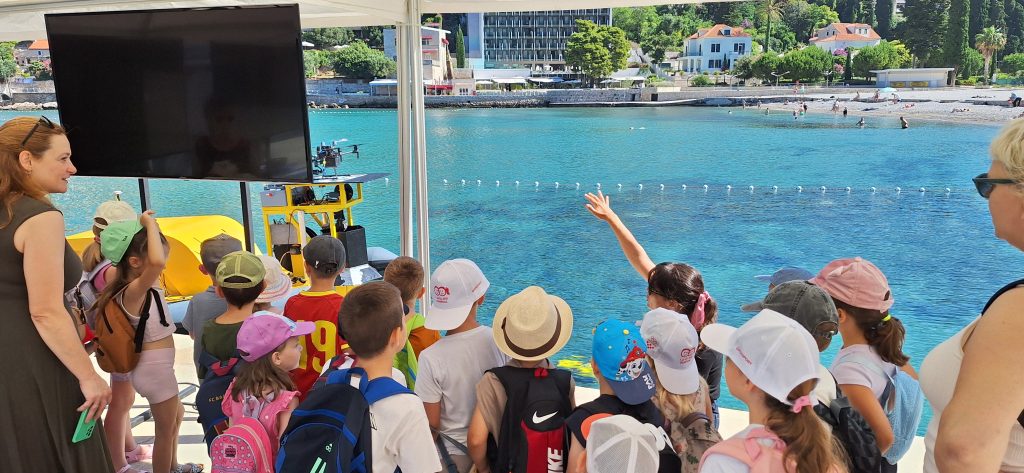
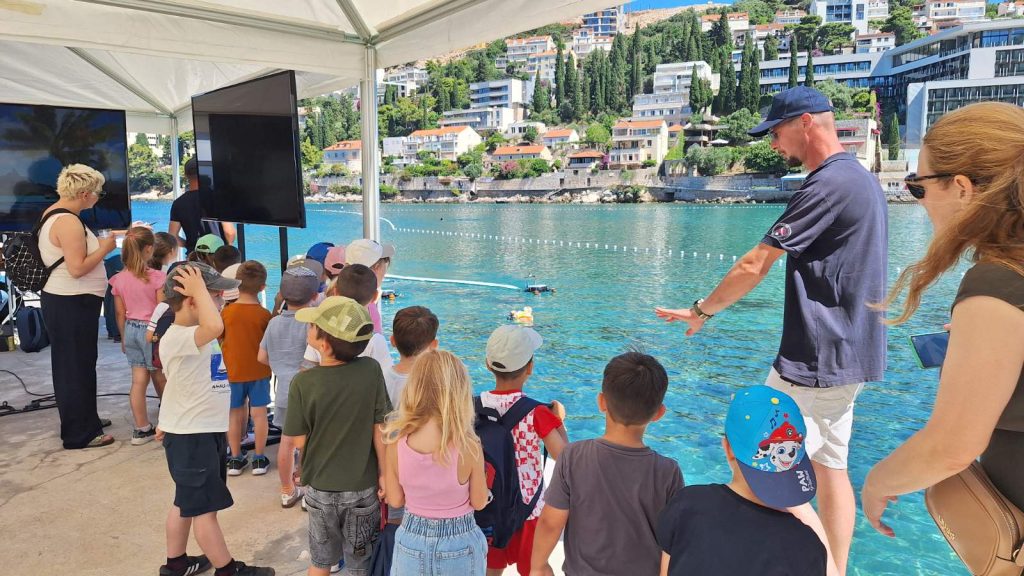
On June 10th 2026, a Public Demonstration took place on a public beach in Lapad Bay, Dubrovnik, where all project partners presented the SeaClear 2.0 system to a wider audience, including representatives of public institutions, local stakeholders, researchers, and members of the general public. The event offered visitors a unique opportunity to observe the autonomous robotic platforms in action and learn more about the innovative technologies being developed to address the challenge of marine litter in coastal and marine environments.
Funded under the Horizon Europe programme, SeaClear 2.0 is the continuation of the SeaClear 1.0 project and addresses the urgent issue of marine litter, with nearly half a million tons of plastic estimated to enter European seas each year. The project aims to deliver a holistic solution by integrating technological innovation with community engagement and policy development. The initiative combines robotic perception, AI, marine engineering, and social science to enable intelligent, autonomous waste removal from coastal and port environments.
The consortium, coordinated by Delft University of Technology, comprises 13 partners from 9 countries, drawing expertise from different fields: autonomous systems, environmental ecology, marine operations, public engagement, and circular economy strategies. The University of Dubrovnik, through its interdisciplinary team led by prof.dr.sc.Ivana Palunko (LARIAT), contributes extensively through the development of SeaBees and SeaHawk subsystems, ecological assessment, and feasibility studies to ensure the system’s technological, environmental, and economic sustainability.
The successful completion of the trials, technical demonstration, and public event marks another important milestone for the SeaClear 2.0 project and demonstrates the strength of international collaboration in developing advanced technological solutions for cleaner and healthier marine environments.