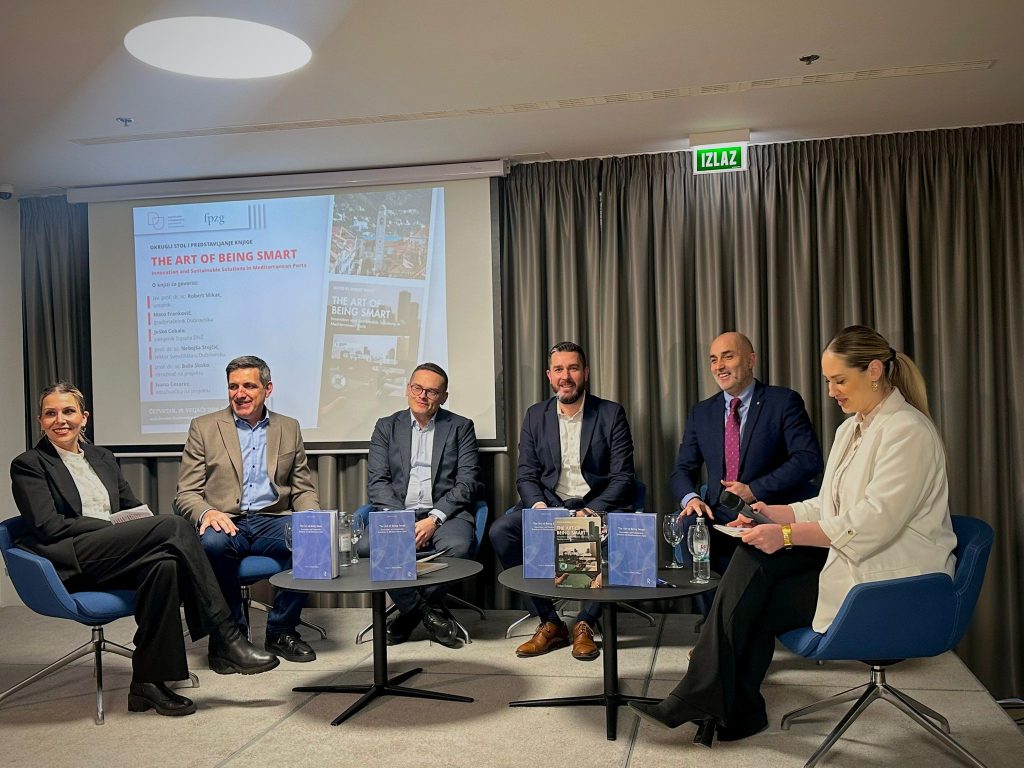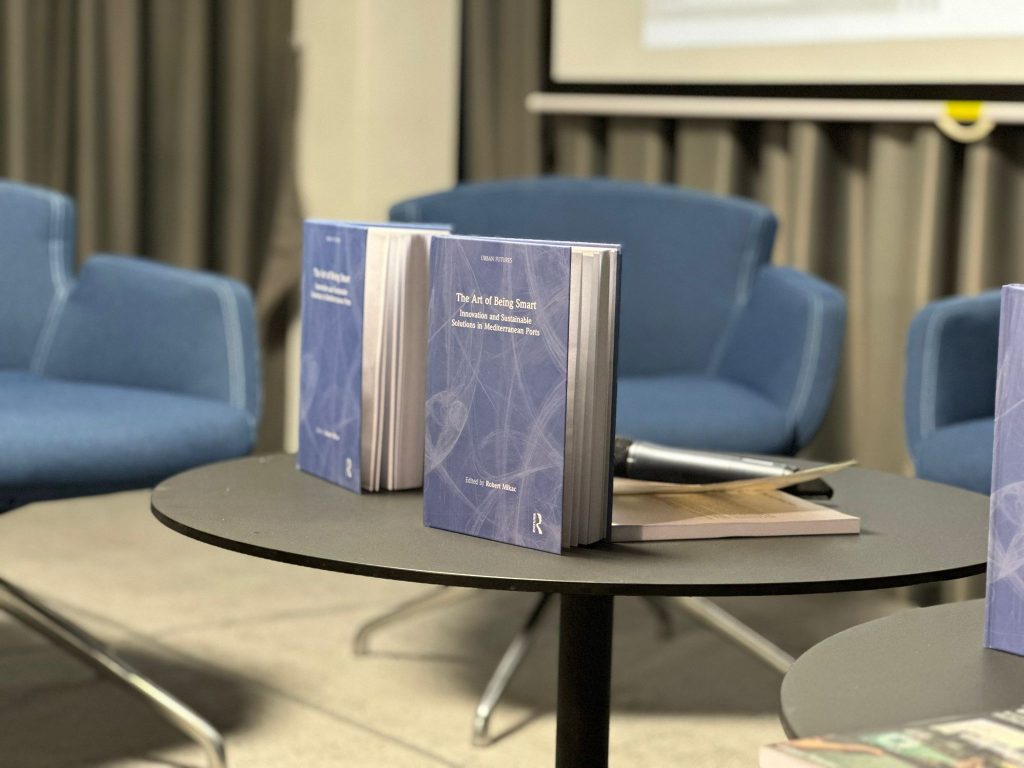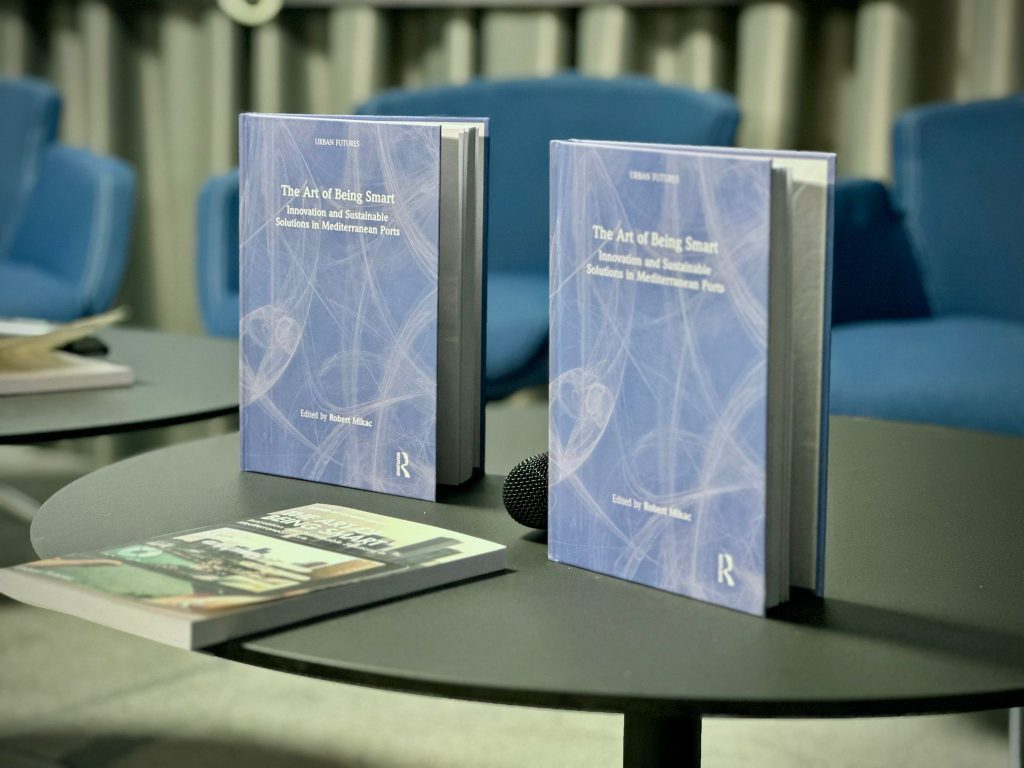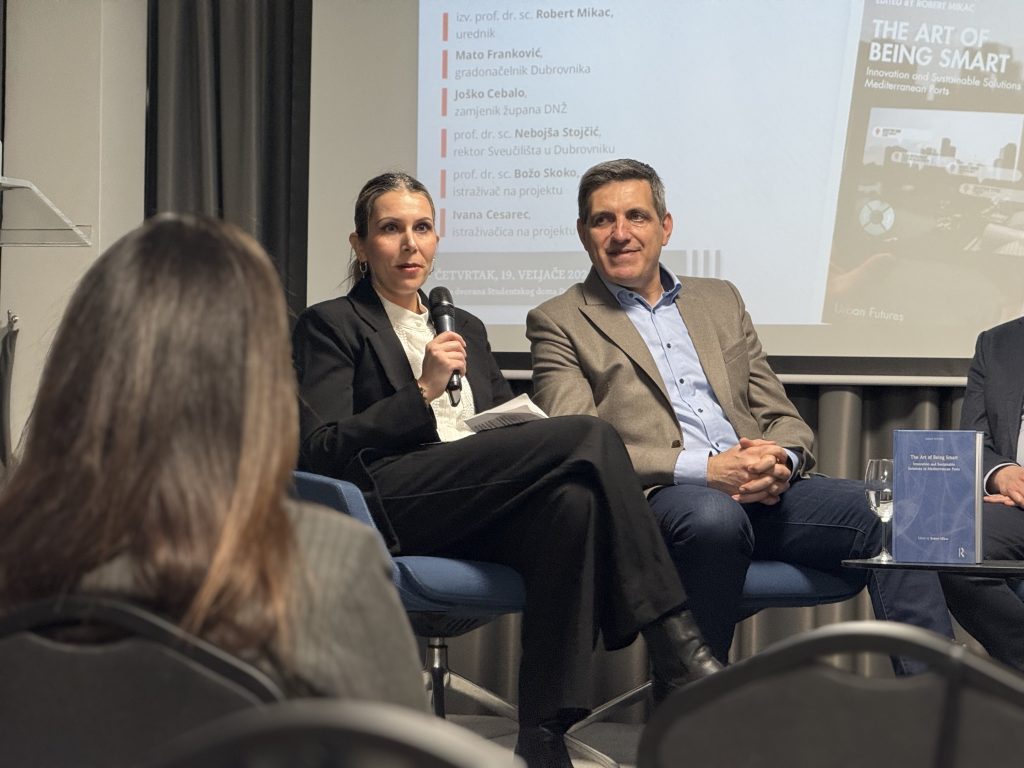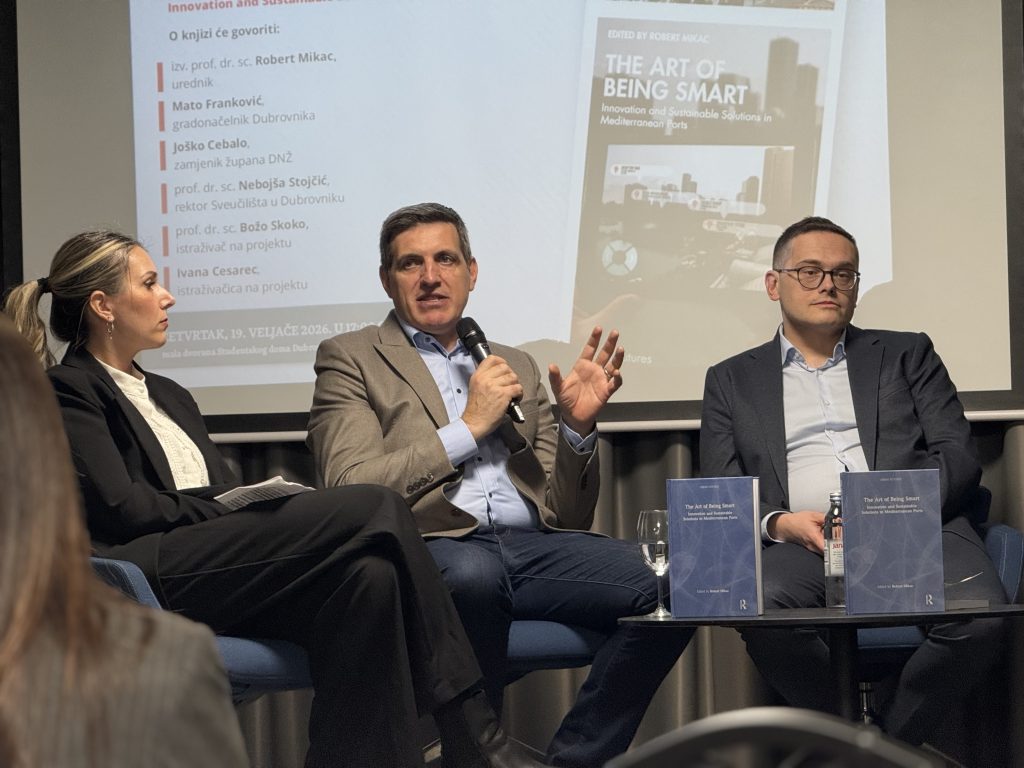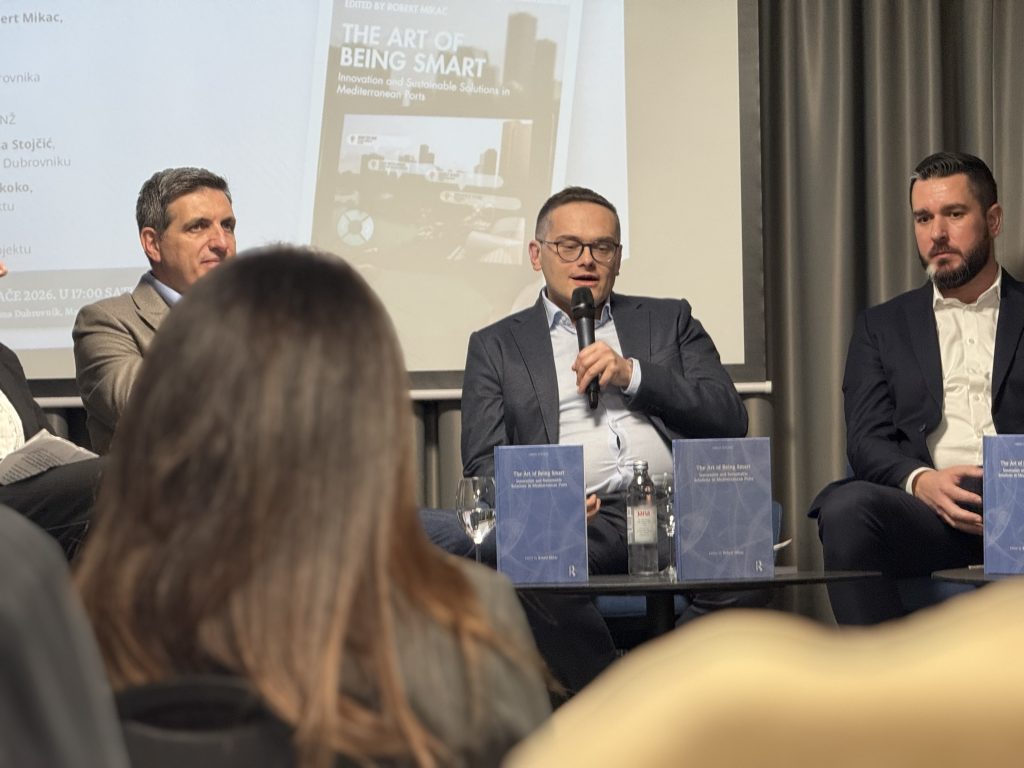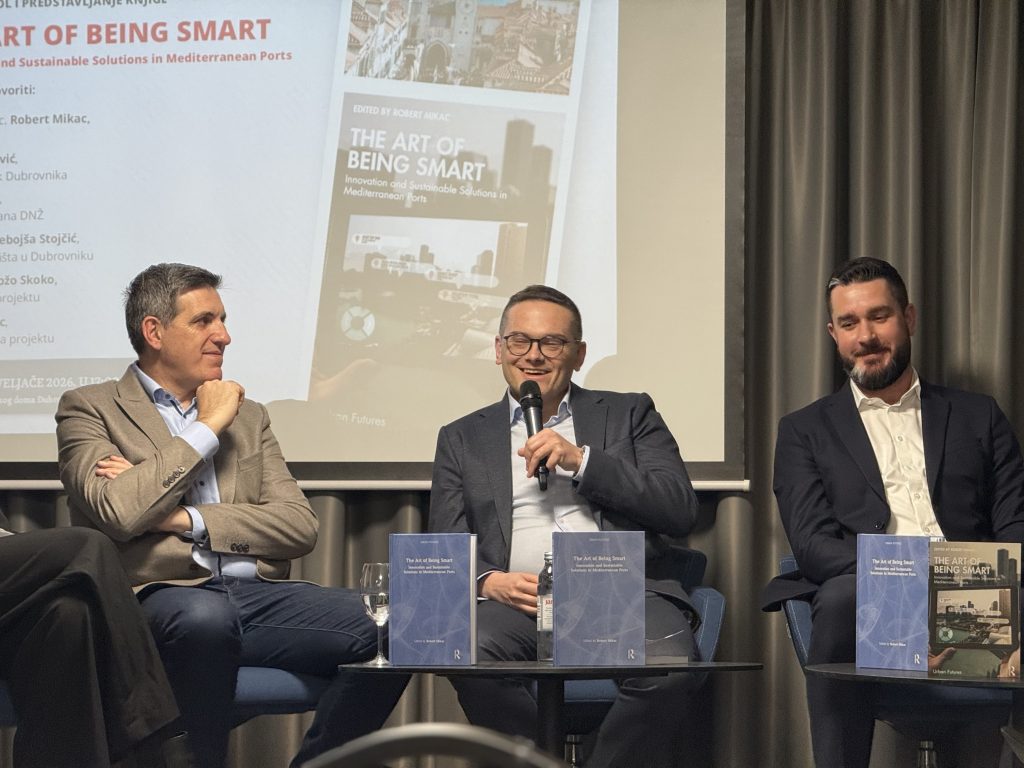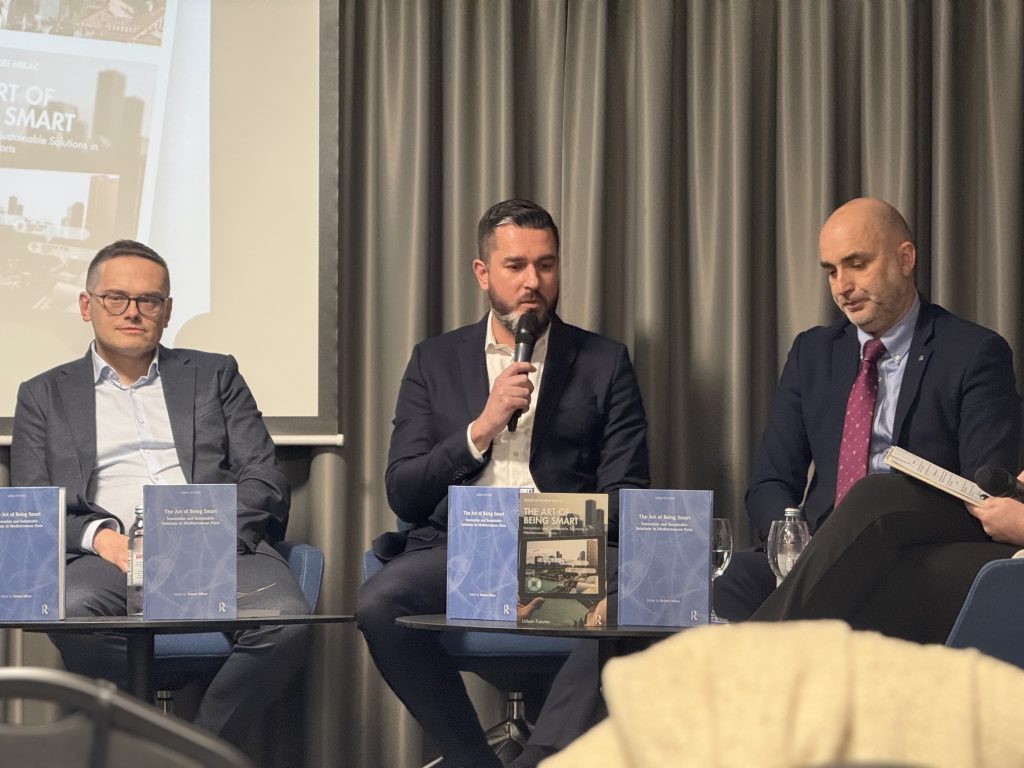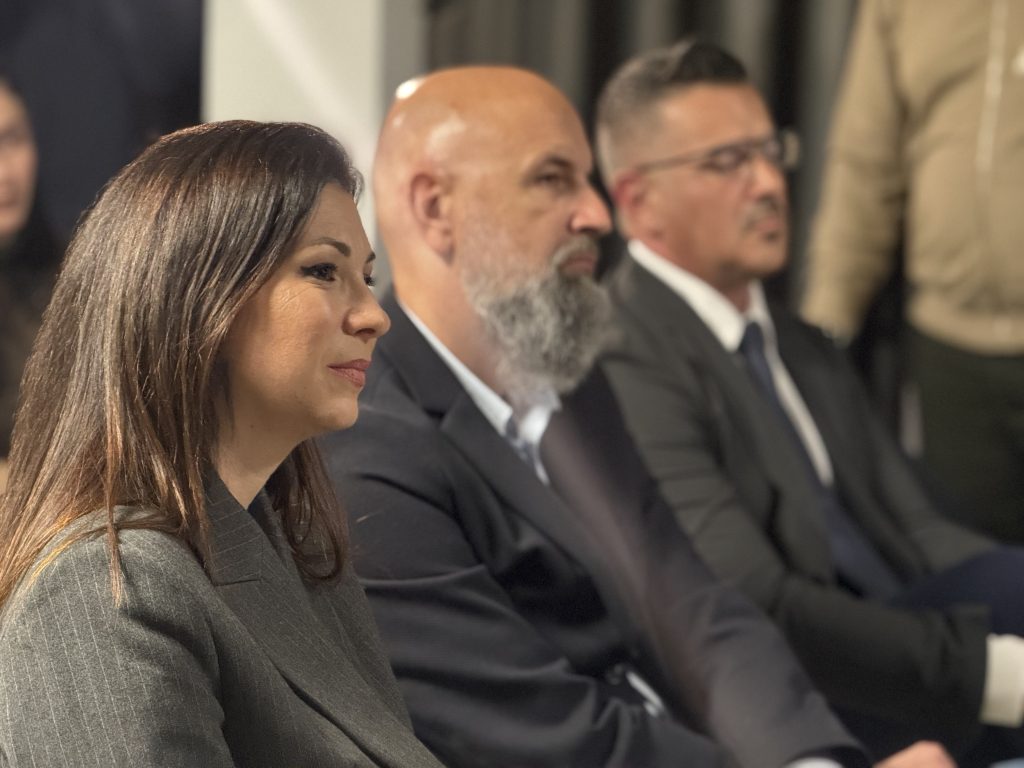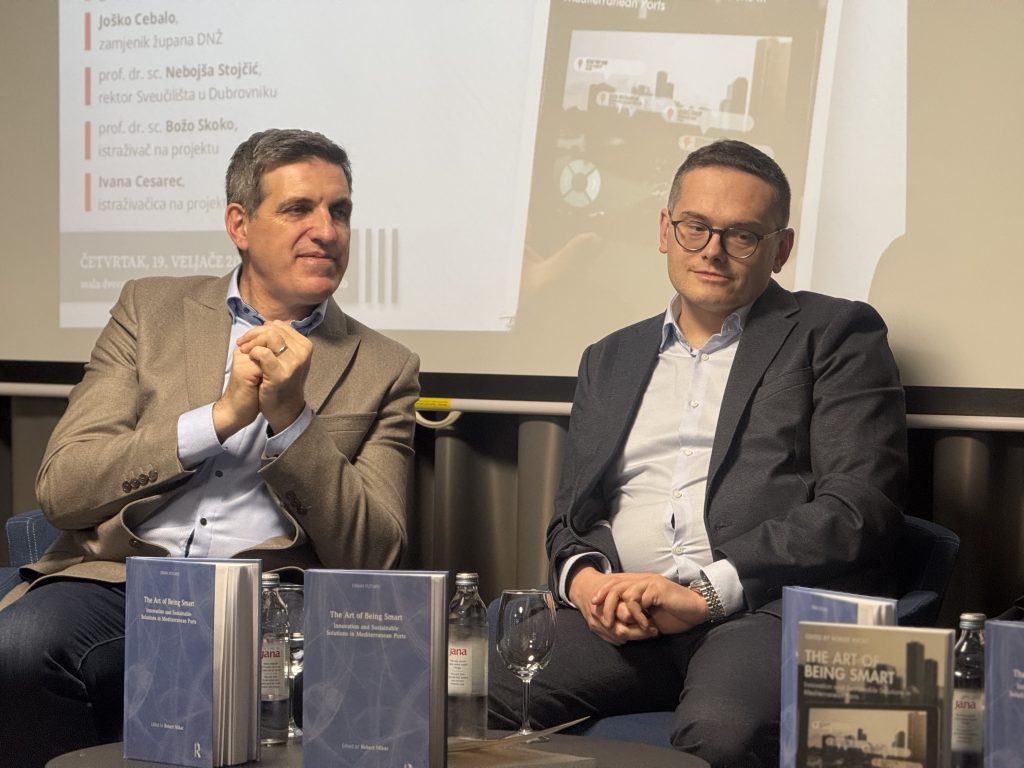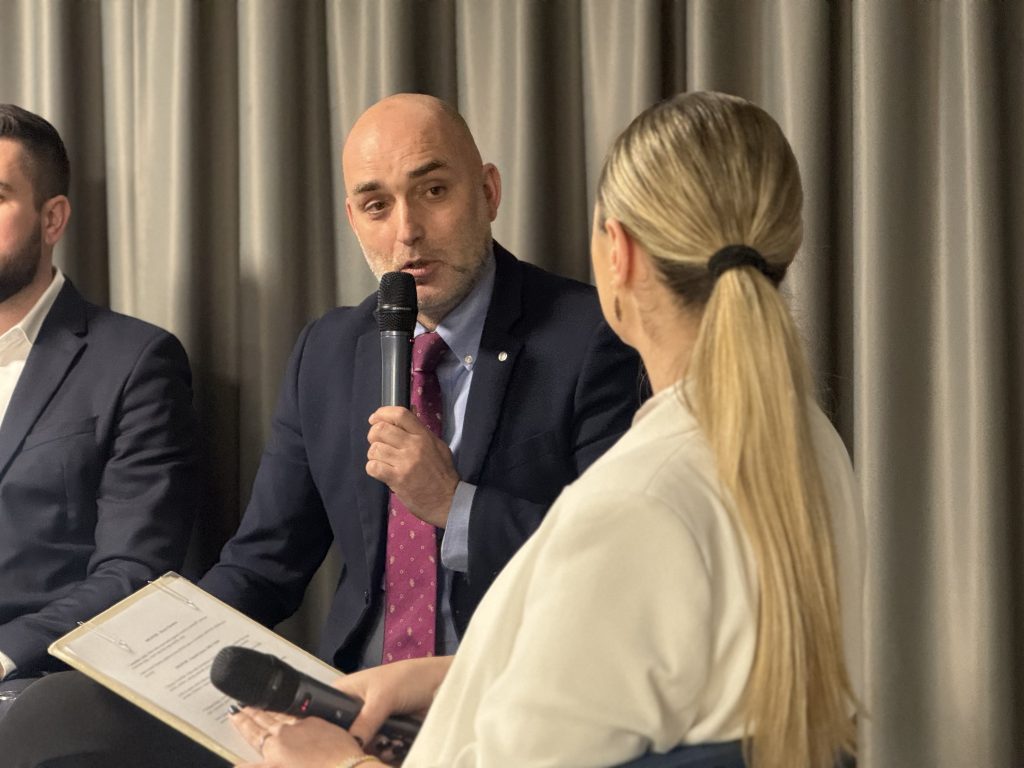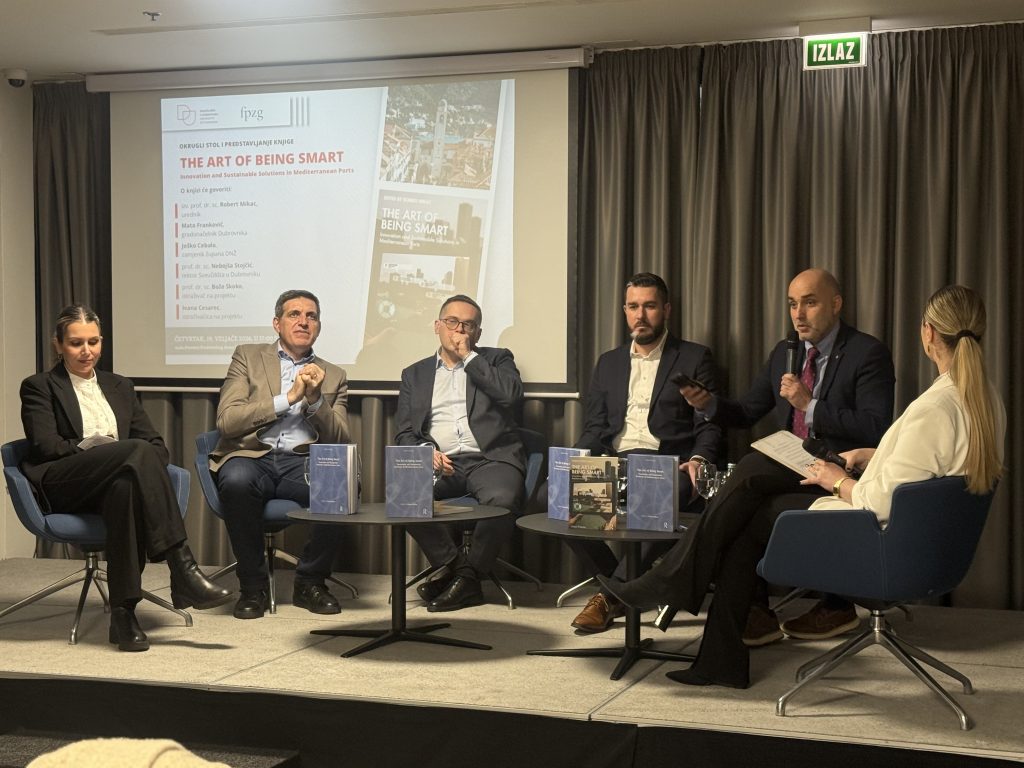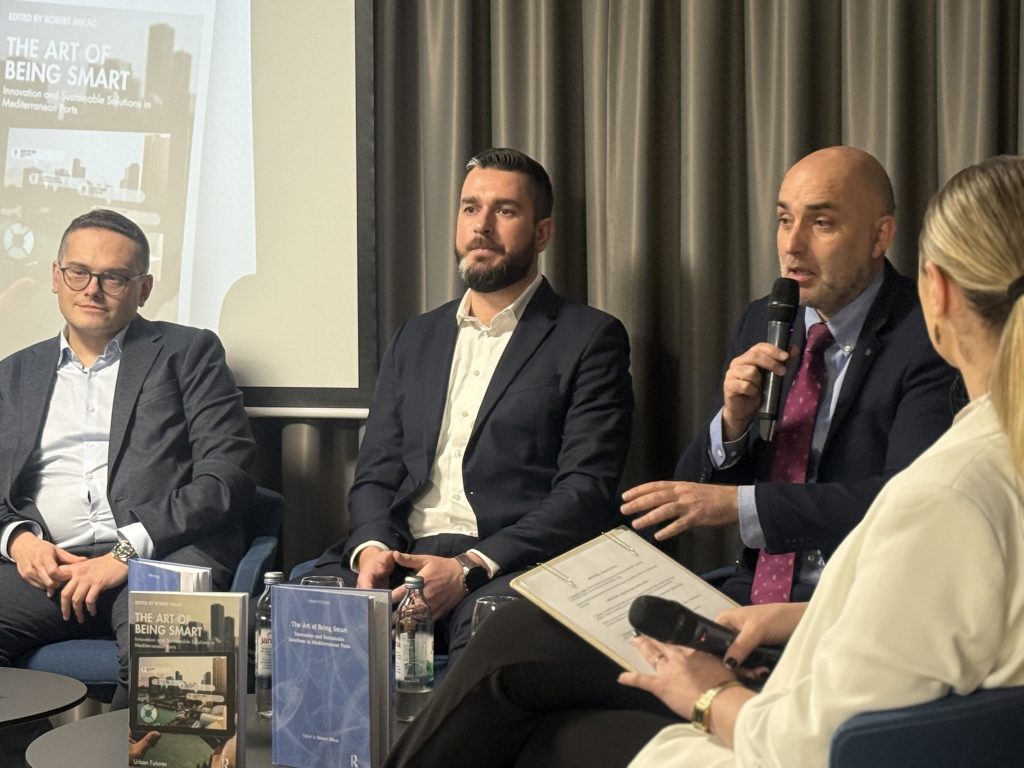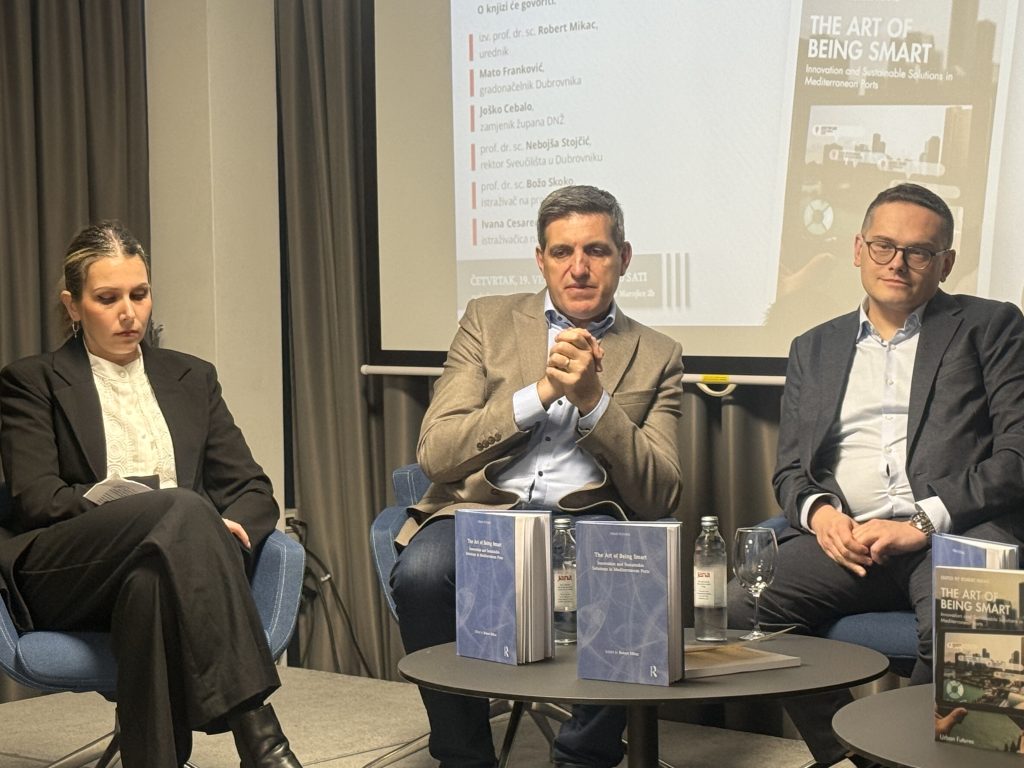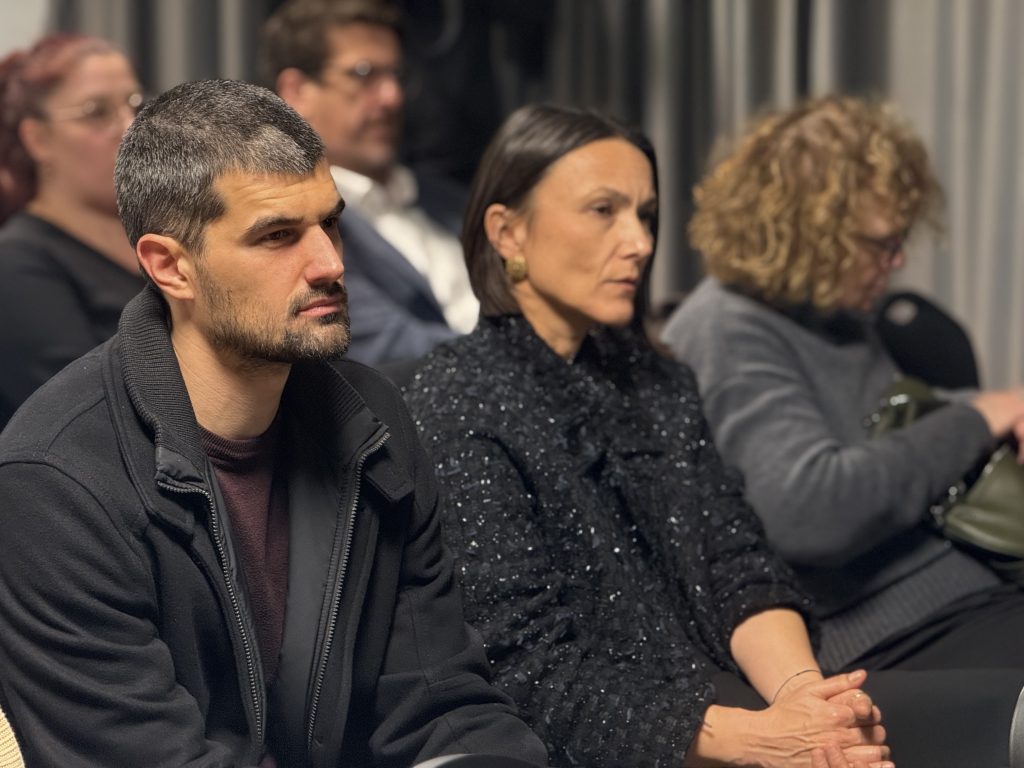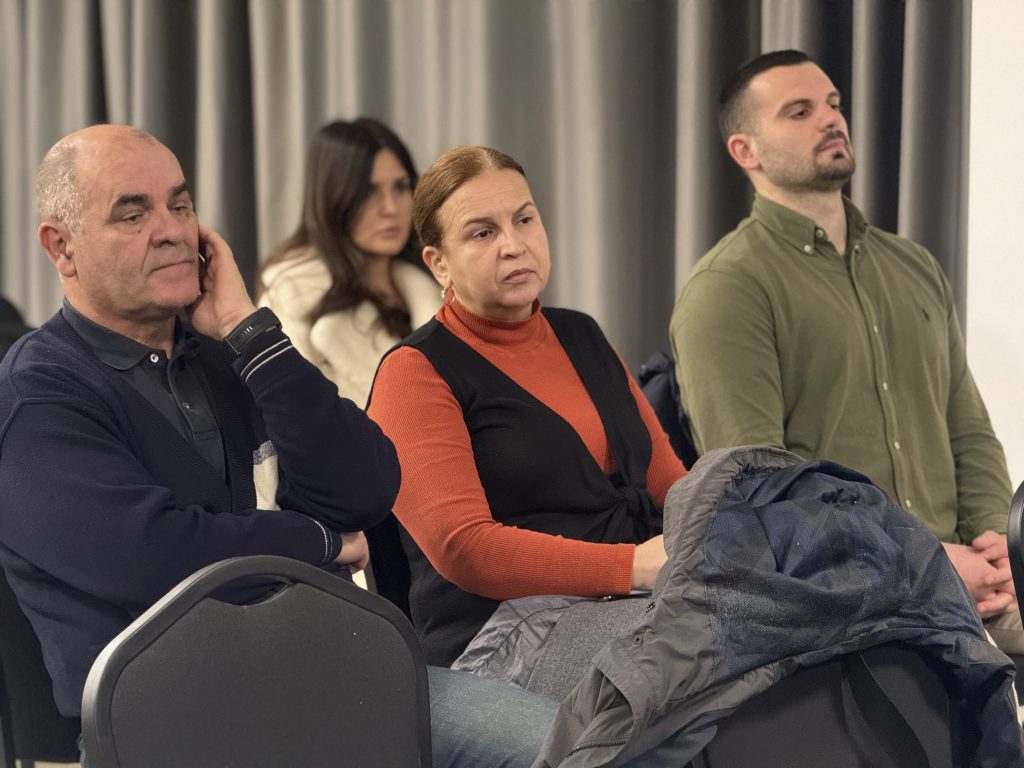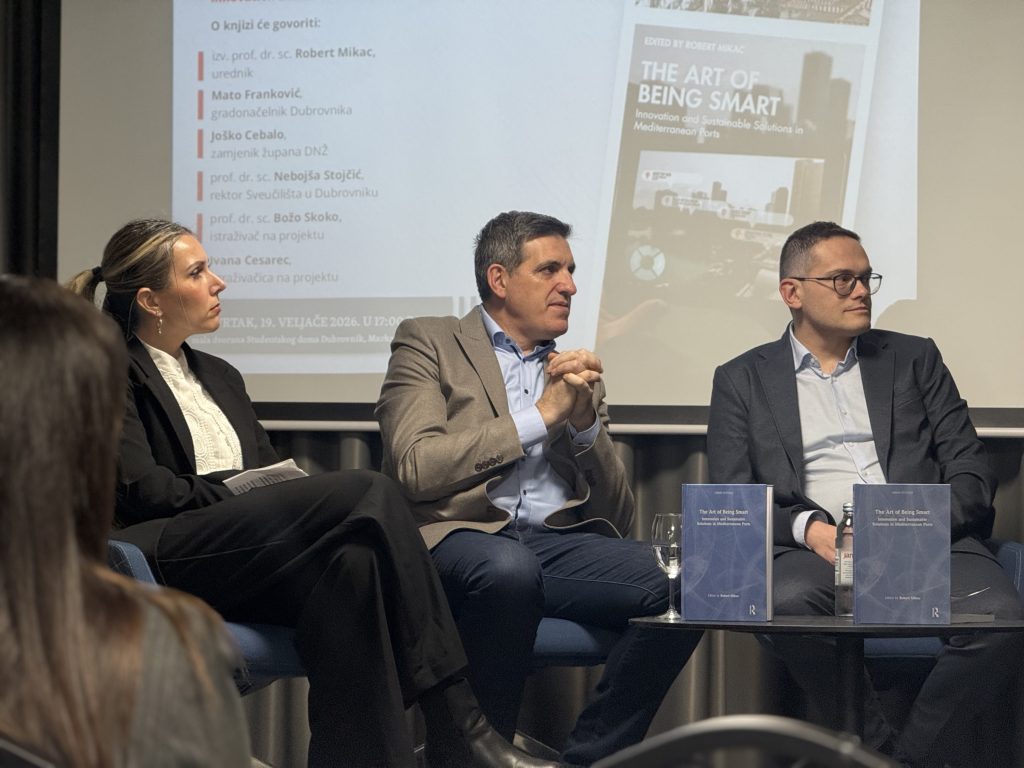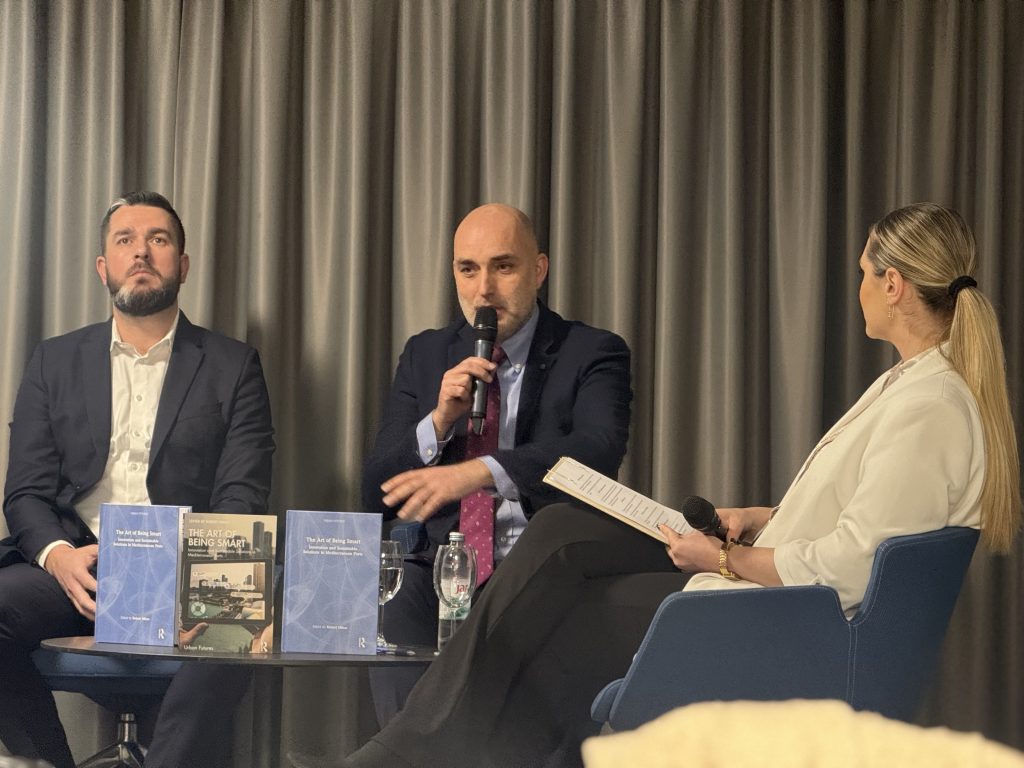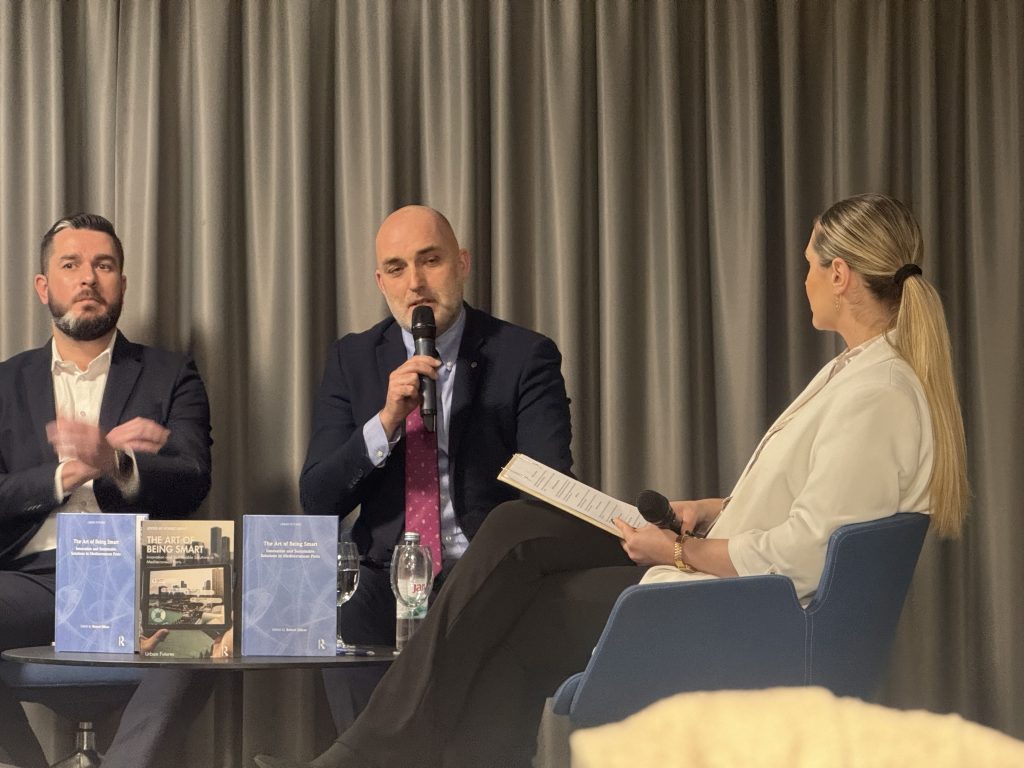

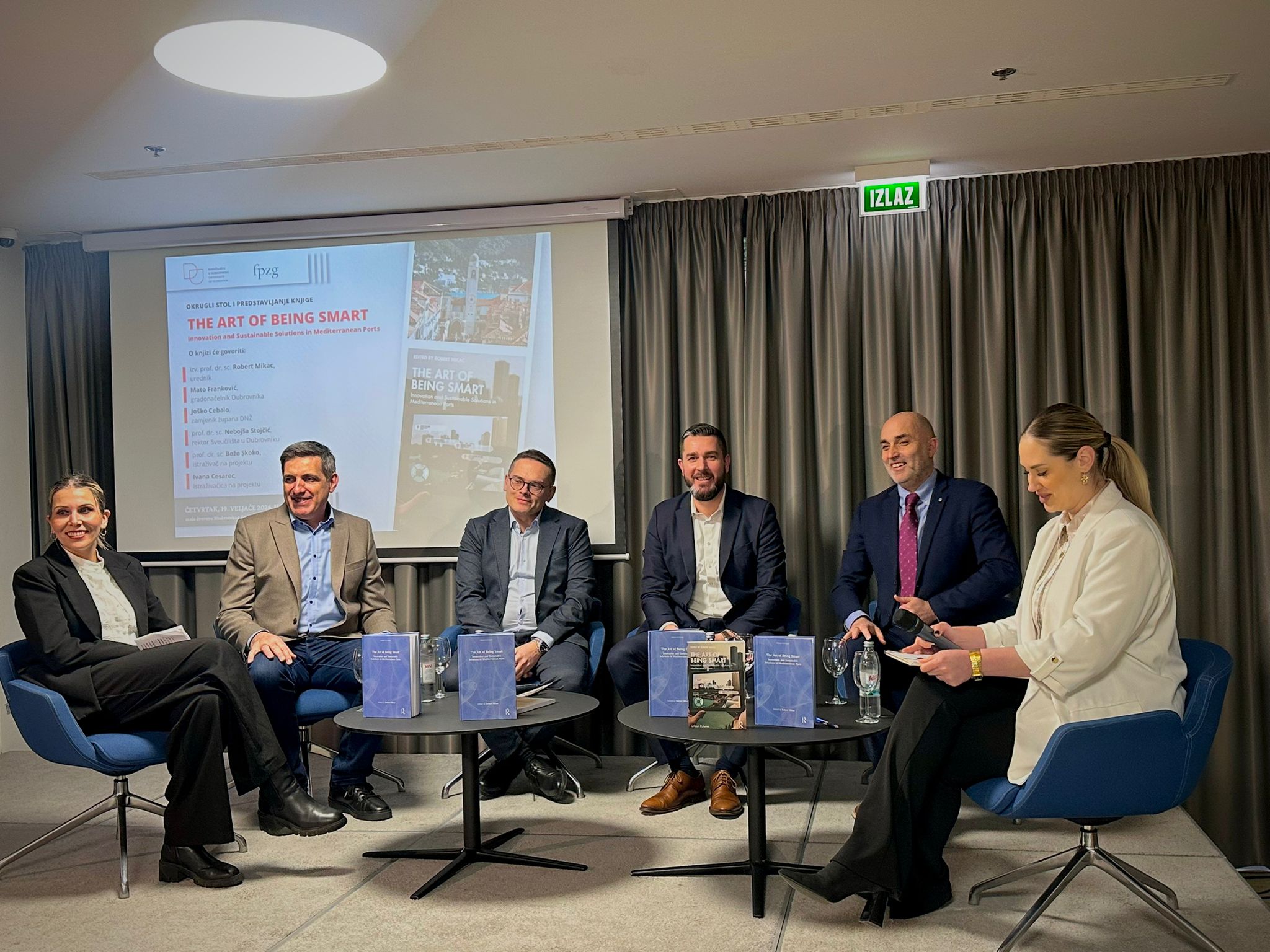
A round table discussion and promotion of the scientific book The Art of Being Smart: Innovation and Sustainable Solutions in Mediterranean Ports, dedicated to innovative and sustainable approaches to the development of Mediterranean ports and smart cities, was held at the Student Dormitory of the University of Dubrovnik on Thursday, 19 February 2026.
The book was presented by its editor, Associate Professor Robert Mikac, PhD, who spoke about the creation of the publication and the importance of interdisciplinary cooperation in shaping sustainable urban development, as well as connecting scientific research with public policies and practice. The book was developed through international cooperation between partner institutions — the University of Dubrovnik, the University of Zagreb, the University of Malta, the University of Limassol, and the University of Nicosia — further confirming the importance of a collaborative research approach to contemporary challenges in the Mediterranean region.
The publication was released by Routledge, part of the Taylor & Francis Group, within the renowned Urban Futures series. On this occasion, special thanks were expressed to the series editor Professor Binti Singh, PhD, and to Mr. Aakash Chakrabarty, commissioning editor at Routledge Taylor & Francis, for their support in bringing the publication to fruition.
The discussion featured Marko Potrebica, President of the Dubrovnik City Council; Joško Cebalo, Deputy Prefect of the Dubrovnik-Neretva County; Professor Nebojša Stojčić, PhD, Rector of the University of Dubrovnik; Professor Božo Skoko, PhD, Vice-Rector at Algebra Bernays University; and researcher Ivana Cesarec.
Marko Potrebica reflected on the challenges of governing Dubrovnik as a historic city that simultaneously develops contemporary governance models, emphasizing the role of smart solutions in preserving citizens’ quality of life and ensuring destination sustainability. Deputy Prefect Joško Cebalo discussed the development of the Dubrovnik-Neretva County port system in the context of digitalisation, innovation, and the alignment of regional development priorities.
Rector Stojčić highlighted the importance of strong cooperation between the academic community and local and regional authorities, stressing the University’s role as a partner in advancing knowledge, innovation, and sustainable development policies. Professor Skoko addressed the perception, identity, and reputation of cities, emphasizing that strategic communication represents a key element in the development of smart cities. Researcher Ivana Cesarec presented research findings on the application of smart city principles in Dubrovnik, including a comparative perspective with the Mediterranean cities of Valletta and Limassol.
In the second part of the discussion, participants addressed future challenges of smart and sustainable urban governance, the alignment of development strategies, and Dubrovnik’s potential to further strengthen its position within the Mediterranean space of knowledge and innovation through the synergy of science, public administration, and international cooperation.
Following the Dubrovnik promotion, the book will continue its international promotion cycle, with the next presentation scheduled to take place in Valletta, followed by Limassol, further confirming the project’s international character and relevance within the broader Mediterranean context.
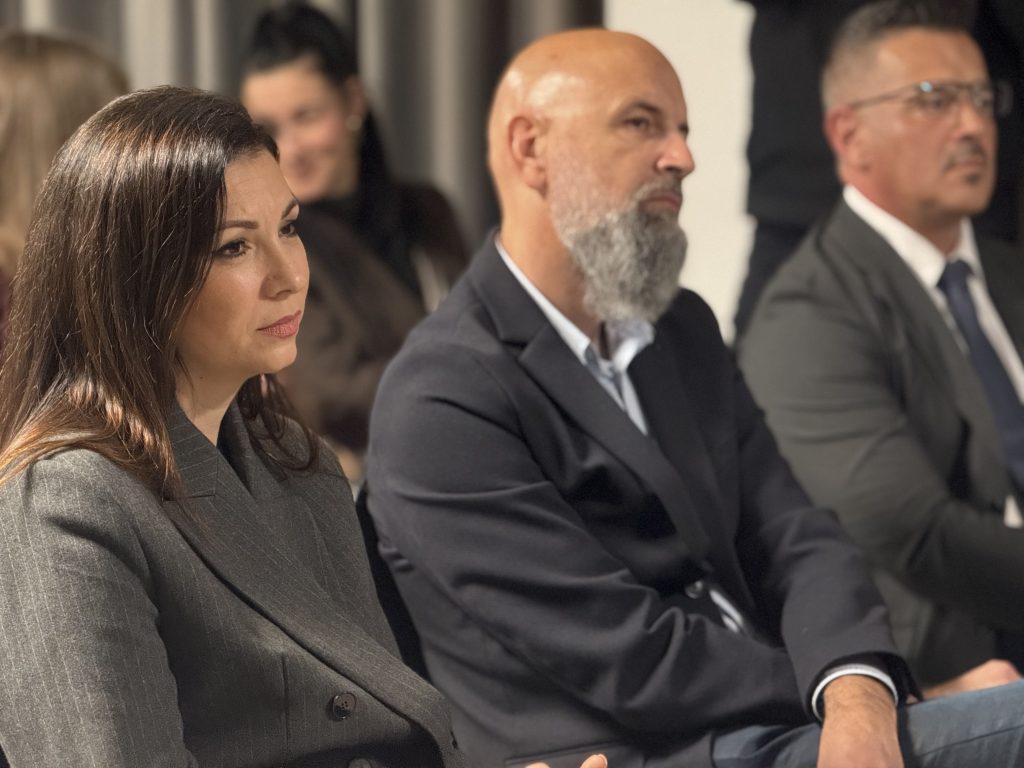
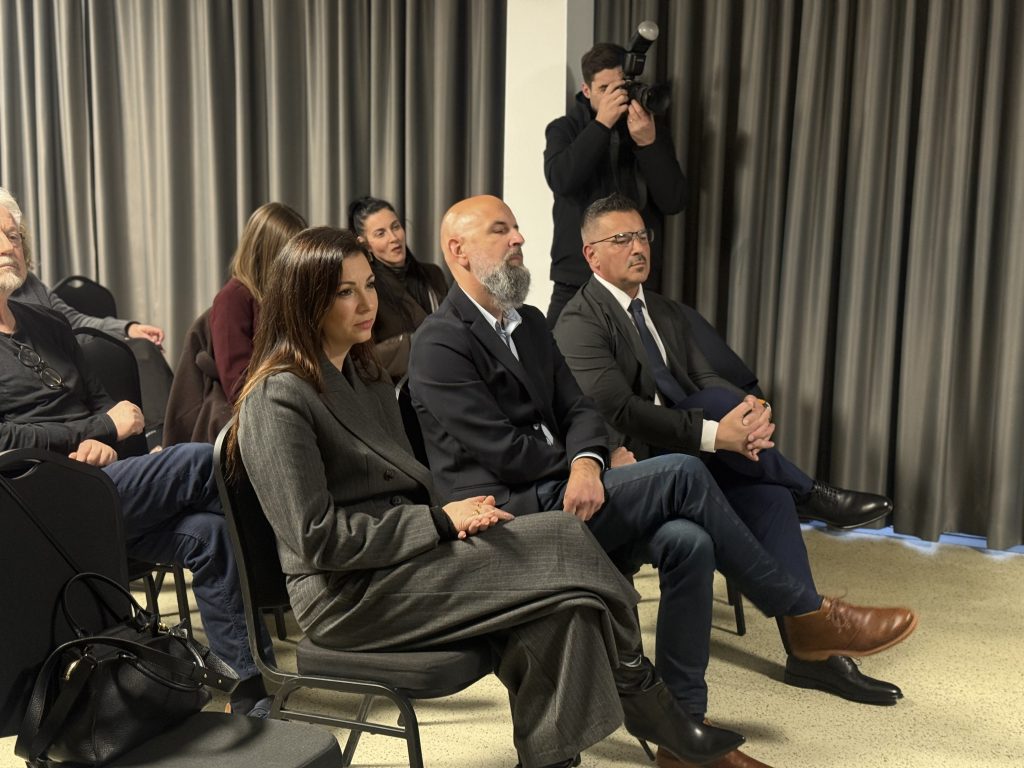
The event concluded with an informal discussion between participants and the audience, highlighting the importance of continuous dialogue between science, public administration, and society in shaping a sustainable urban future.